Home/Case Studies/AI SEO Case Study: AI Search vs Google Traffic
Case study
AI SEO Case Study: AI Search vs Google Traffic
Explore if AI search is replacing Google traffic with real data, trends and insights. Understand the future of SEO and AI search.
- Google + AI answers
- Transparent reporting
- India & global markets
Free proposal · 24h reply
Get My FREE AI SEO Case Study Proposal
Tell us about your business – we will send a custom plan with an AI-visibility snapshot.
We optimise for
- Google Search
- Google AI Overviews
- ChatGPT
- Gemini
- Perplexity
- Microsoft Copilot
- Claude
- Bing
Case Study: Is AI Search Replacing Google Traffic? Real Data & Insights
This case study explores whether AI search is actually replacing Google traffic for B2B and B2C websites. While many businesses are seeing traffic shifts, the reality is more complex than a simple replacement. By analyzing real data, behavioral changes, and visibility patterns, we uncovered how AI search is redistributing traffic rather than eliminating it. This study shows how brands can adapt by optimizing for both traditional search and AI-driven discovery to maintain growth, visibility, and lead generation in a rapidly evolving search ecosystem.

AI SEO CASE STUDY PHASE
Understanding the Traffic Shift Reality
The initial assumption was that AI search is replacing Google traffic completely. However, data showed a different picture. Traditional search is still dominant, but user behavior is shifting toward faster, answer-based experiences.
Instead of replacing Google, AI platforms are changing how users consume information. Many queries are resolved without clicks, which directly impacts website traffic.
This shift highlights that the issue is not loss of demand, but a change in how that demand is fulfilled.
AI SEO CASE STUDY PHASE
AI Search Growth vs Google Dominance
AI search has grown rapidly, capturing around 12–15% of global search share by 2025, while Google still holds close to 90% of the market :contentReference[oaicite:0]{index=0}.
This indicates that AI is expanding the search ecosystem rather than replacing it entirely. Users are now using both platforms depending on their needs.
For businesses, this means optimization must extend beyond Google to include AI-driven platforms.

Free strategy call
Not sure which AI SEO Case Study plan fits your business?
Talk to a senior strategist. We will review your visibility on Google and AI answers and map the quickest wins – free.
AI SEO CASE STUDY PHASE
Zero-Click Behavior and Traffic Loss
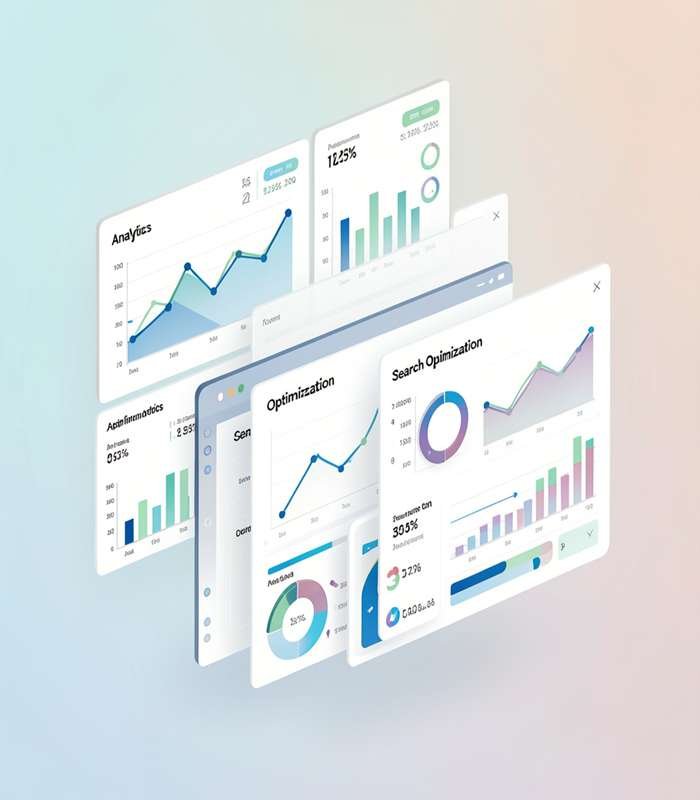
One of the biggest impacts of AI search is zero-click behavior. When AI summaries appear, users often do not visit websites.
Studies show that AI Overviews can reduce clicks by up to 34.5% and even higher for certain queries :contentReference[oaicite:1]{index=1}.
This explains why traffic is dropping even when rankings remain stable.
AI SEO CASE STUDY PHASE
AI Traffic vs Traditional Traffic Volume
Despite rapid growth, AI traffic still represents a small portion of total web traffic. In many cases, it contributes less than 1–2% of overall visits :contentReference[oaicite:2]{index=2}.
However, its growth rate is extremely high, increasing multiple times year over year.
This shows that while AI is not replacing Google yet, it is becoming a critical emerging channel.


AI SEO CASE STUDY PHASE
Quality vs Quantity of Traffic
AI traffic converts significantly better than traditional traffic. Conversion rates from AI search can be up to 5x higher than Google organic traffic :contentReference[oaicite:3]{index=3}.
This means fewer visitors can still generate better business outcomes.
The focus is shifting from traffic volume to traffic quality and intent.
AI SEO CASE STUDY PHASE
User Behavior Transformation
Users now prefer conversational and direct answers instead of browsing multiple pages. This behavior is driving the growth of AI platforms.
Longer queries and detailed prompts indicate that users expect personalized results rather than generic listings.
This transformation requires a new approach to content creation and optimization.
AI SEO CASE STUDY PHASE
Why Google Traffic Is Declining
Traffic decline is primarily driven by AI features within Google itself, not external competition.
AI summaries reduce the need for clicks, and more queries are answered directly on the results page.
This means businesses must optimize for visibility within search results, not just clicks.
AI SEO CASE STUDY PHASE
AI Visibility as the New Ranking Metric
Success is no longer measured only by rankings. Instead, visibility within AI-generated responses is becoming the key metric.
Brands that appear in AI answers gain authority even without direct clicks.
This requires a shift toward structured, authoritative, and context-rich content.

AI SEO CASE STUDY PHASE
Future Prediction: Replacement or Integration?
Industry forecasts suggest AI search may surpass traditional search traffic by 2028, but not replace it completely :contentReference[oaicite:4]{index=4}.
Instead, both systems will coexist, serving different user needs and intents.
The key is to optimize for both channels simultaneously.
AI SEO CASE STUDY PHASE
Building a Hybrid Traffic Strategy
The winning strategy is not choosing between Google and AI search, but combining both.
Businesses must optimize for rankings, visibility, and AI mentions simultaneously to capture full market demand.
This hybrid approach ensures consistent growth and future-proof performance.
Why SEO Plus GEO
Why ambitious brands choose us
A specialist team for the new search landscape – classic Google rankings and AI-generated answers, under one roof.
AI-first strategy
Built for Google, AI Overviews, ChatGPT, Gemini and Perplexity together – not bolted on later.
Transparent reporting
Clear monthly reports on rankings, traffic, leads and AI mentions you can actually act on.
White-hat methods
Sustainable, guideline-compliant SEO that protects your brand and compounds over time.
India & global
Campaigns for India, the UAE, the USA, the UK and international markets.
Our process
How we deliver results
A proven four-step system – the same rigour for a local business or a global brand.
Audit & research
Technical audit, keyword and competitor research, plus a visibility check across Google and major AI assistants.
Strategy
A prioritised roadmap of pages, entities, content and authority signals to win your market.
Execution
On-page SEO, answer-ready content, schema, technical fixes and digital PR – shipped every sprint.
Report & scale
Track rankings, citations and leads – then double down on what works.
FAQ
Questions, answered
Can’t find what you are looking for? Our strategists reply within one business day.
Is AI search replacing Google traffic completely?
No, AI search is not completely replacing Google traffic. Data shows that traditional search engines still dominate the majority of traffic. However, AI is changing how users interact with search results by providing direct answers. This reduces clicks but does not eliminate the need for search engines.
Why is my traffic dropping if rankings are stable?
Traffic drops occur because users are getting answers directly from AI summaries without visiting websites. Even if your rankings remain the same, fewer users click through to your site. This is known as zero-click behavior and is a major factor behind declining traffic.
Is AI traffic more valuable than Google traffic?
Yes, AI traffic is often more valuable because it comes from users with higher intent. These users are typically further along in the decision-making process. As a result, AI traffic tends to have higher conversion rates compared to traditional search traffic.
Should businesses focus only on AI search now?
No, businesses should not focus only on AI search. A balanced approach is essential. Traditional SEO still drives the majority of traffic, while AI search provides high-quality opportunities. Combining both ensures better long-term performance and visibility.
How can I benefit from AI search growth?
To benefit from AI search, focus on creating structured, clear, and intent-driven content. Improve authority signals and ensure your content is easy to extract. This increases the chances of being featured in AI-generated responses.
Will AI search completely replace Google in the future?
AI search may grow significantly and even surpass traditional search traffic in some areas, but it is unlikely to fully replace Google. Both systems will continue to evolve and serve different types of user needs.
What industries are most affected by AI search?
Industries with high research intent, such as SaaS, finance, healthcare, and eCommerce, are most affected. These sectors rely heavily on information-based queries, which are often answered directly by AI systems.
Does AI search reduce website traffic permanently?
AI search does not permanently reduce traffic, but it changes how traffic is distributed. Websites that adapt to AI visibility can recover and even grow their traffic by targeting high-intent users.
How important is content structure for AI search?
Content structure is extremely important. AI systems prefer content that is clear, well-organized, and easy to extract. Structured content improves visibility and increases the chances of being featured in AI responses.
What is the best strategy for future traffic growth?
The best strategy is a hybrid approach that combines traditional SEO with AI optimization. Focus on visibility, authority, and user intent. This ensures sustainable growth across both search engines and AI platforms.
Keep exploring
Related services & guides
AI SEO Case Study: Recovering Lost Traffic
Explore our case studies expertise →
AI SEO, CGATGPT, GOOGLE GEMINI CASE STUDY
Explore our case studies expertise →
AI SEO Case Study: Fixing Brand Visibility in AI Search
Explore our case studies expertise →
AI SEO Case Study: Traffic Growth
Explore our case studies expertise →
AI SEO Case Study: How ChatGPT Selects Content
Explore our case studies expertise →
AI SEO Case Study: Ranking in ChatGPT Answers
Explore our case studies expertise →
Let’s grow together
Ready to rank on Google and get cited by AI?
Get a free, no-obligation proposal with an AI-visibility snapshot of your brand across Google, ChatGPT, Gemini and Perplexity.
- Free consultation with a senior strategist
- Custom roadmap for your market
- Serving India & clients worldwide
Free proposal · 24h reply
Get My FREE Proposal
Share your details and goals – we reply within one business day.