Home/Case Studies/AI SEO Case Study: Why Our Content Was Ignored
Case study
AI SEO Case Study: Why Our Content Was Ignored
Understand how AI crawlers index content and why your pages are ignored. Fix indexing issues and improve AI search visibility.
- Google + AI answers
- Transparent reporting
- India & global markets
Free proposal · 24h reply
Get My FREE AI SEO Case Study Proposal
Tell us about your business – we will send a custom plan with an AI-visibility snapshot.
We optimise for
- Google Search
- Google AI Overviews
- ChatGPT
- Gemini
- Perplexity
- Microsoft Copilot
- Claude
- Bing
Case Study: AI Crawler Indexing Explained – Why Your Content Is Ignored
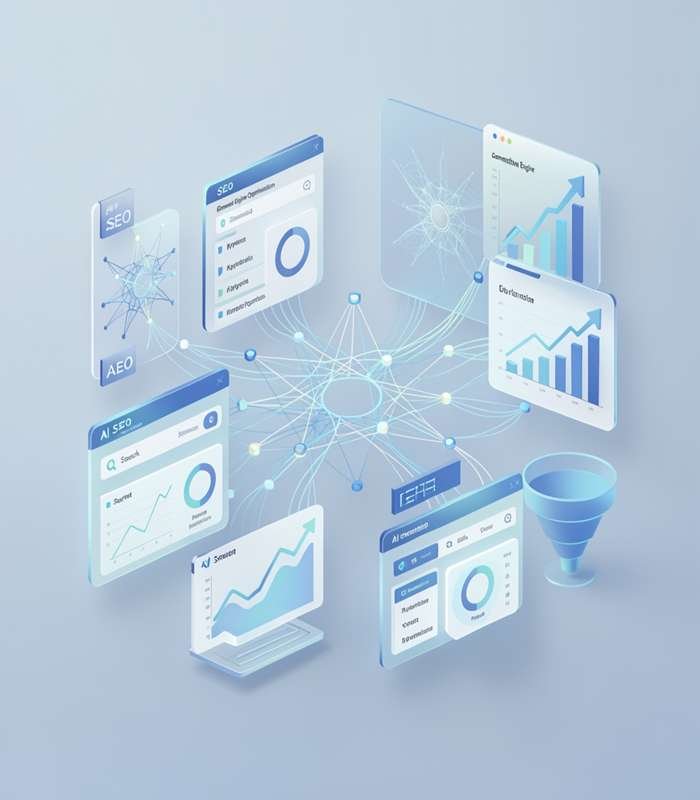
This case study explains why both B2B and B2C websites fail to get indexed and surfaced by AI crawlers despite having quality content. Modern AI systems rely on structured accessibility, contextual clarity, and crawl efficiency rather than traditional indexing signals alone. We identified key issues that prevented content from being discovered and processed. By restructuring technical layers, improving crawl paths, and aligning content with AI-readable formats, we transformed an invisible website into a consistently indexed and visible asset across AI-driven search environments.
AI SEO CASE STUDY PHASE
Understanding AI Crawler Behavior
The first step was understanding how AI crawlers interact with websites. Unlike traditional bots, AI crawlers focus on extracting meaningful, structured, and contextually relevant information rather than just indexing pages.
The client’s website had content, but it was not easily accessible or interpretable. Important data was scattered, and the structure did not support efficient crawling.
This created a situation where content existed but was effectively ignored, highlighting the need for crawler-focused optimization.
AI SEO CASE STUDY PHASE
Identifying Crawlability Issues
Our audit revealed multiple crawlability issues. Key pages were buried deep within the site, making them difficult for AI crawlers to discover efficiently.
There were also navigation challenges, weak internal linking, and inconsistent URL structures that disrupted crawling patterns.
These issues reduced visibility and prevented AI systems from accessing critical content, directly impacting indexing and discoverability.
Free strategy call
Not sure which AI SEO Case Study plan fits your business?
Talk to a senior strategist. We will review your visibility on Google and AI answers and map the quickest wins – free.

AI SEO CASE STUDY PHASE
Analyzing Content Accessibility
We evaluated how easily content could be accessed and understood by AI systems. The content lacked clear segmentation and logical flow, making extraction difficult.
Large blocks of text without structure reduced readability and usability. Important insights were not highlighted effectively.
Improving accessibility became essential to ensure that AI crawlers could process and utilize the content correctly.
AI SEO CASE STUDY PHASE
Restructuring Website Architecture
We redesigned the site architecture to create a clear and logical hierarchy. Pages were organized into structured categories to improve navigation and crawl paths.
This made it easier for AI crawlers to move through the website and identify important content.
A strong architecture ensured that all key pages were accessible and properly linked within the system.


AI SEO CASE STUDY PHASE
Improving Internal Linking Structure
We implemented a strong internal linking strategy to connect related pages. This ensured that AI crawlers could easily navigate between relevant topics.
Internal links helped distribute authority and highlighted important pages within the website.
This improvement significantly enhanced crawl efficiency and increased the likelihood of proper indexing.
AI SEO CASE STUDY PHASE
Enhancing Content Structure for AI
We restructured content into smaller, well-defined sections with clear headings. This improved readability and made information easier to extract.
Each section was optimized to deliver a focused message, aligning with how AI systems process content.
This structured format increased the chances of content being indexed and used in AI-generated outputs.


AI SEO CASE STUDY PHASE
Fixing Technical Barriers
We resolved technical issues that were blocking or slowing down crawlers. This included optimizing page speed, fixing broken links, and improving mobile responsiveness.
Technical improvements ensured smooth crawling and better accessibility across devices.
Removing these barriers allowed AI systems to efficiently process and index the website content.
AI SEO CASE STUDY PHASE
Improving Content Relevance Signals
We enhanced content relevance by aligning topics with user intent and improving contextual depth. This helped create stronger connections between pages.
Relevant and well-connected content improved how AI systems interpret and prioritize information.
This step ensured that indexed content was not only accessible but also valuable and usable.


AI SEO CASE STUDY PHASE
Achieving Consistent AI Indexing
After implementing these improvements, the website began getting consistently indexed by AI crawlers. More pages were discovered and processed effectively.
This resulted in increased visibility across AI-driven search platforms and improved user engagement.
The transition from ignored to indexed content marked a significant performance breakthrough.
AI SEO CASE STUDY PHASE
Building a Scalable Indexing Framework
We established a scalable framework to maintain and expand AI indexing performance. This ensured that all future content follows optimized structures.
The framework focuses on accessibility, structure, and continuous updates to adapt to evolving AI systems.
This final step transformed the website into a consistently indexable and high-performing digital asset.

Why SEO Plus GEO
Why ambitious brands choose us
A specialist team for the new search landscape – classic Google rankings and AI-generated answers, under one roof.
AI-first strategy
Built for Google, AI Overviews, ChatGPT, Gemini and Perplexity together – not bolted on later.
Transparent reporting
Clear monthly reports on rankings, traffic, leads and AI mentions you can actually act on.
White-hat methods
Sustainable, guideline-compliant SEO that protects your brand and compounds over time.
India & global
Campaigns for India, the UAE, the USA, the UK and international markets.
Our process
How we deliver results
A proven four-step system – the same rigour for a local business or a global brand.
Audit & research
Technical audit, keyword and competitor research, plus a visibility check across Google and major AI assistants.
Strategy
A prioritised roadmap of pages, entities, content and authority signals to win your market.
Execution
On-page SEO, answer-ready content, schema, technical fixes and digital PR – shipped every sprint.
Report & scale
Track rankings, citations and leads – then double down on what works.
FAQ
Questions, answered
Can’t find what you are looking for? Our strategists reply within one business day.
Why is my content not indexed by AI crawlers?
Content may not be indexed due to poor structure, weak internal linking, or technical barriers. AI crawlers prioritize accessibility and clarity. If your content is difficult to navigate or interpret, it may be ignored. Improving structure and crawl paths increases indexing chances.
How do AI crawlers work?
AI crawlers scan websites to extract meaningful and structured information. They focus on understanding context and relevance rather than just indexing keywords. Proper organization and clarity help them process content effectively.
Does website structure affect AI indexing?
Yes, a clear and logical structure is essential. Well-organized pages and strong internal linking improve crawl efficiency. This helps AI systems discover and process content more effectively.
Can technical issues block AI crawlers?
Yes, issues like slow speed, broken links, or poor navigation can block or slow down crawlers. Fixing these problems ensures better accessibility and improves indexing performance.
What type of content gets indexed faster?
Content that is structured, clear, and relevant is indexed faster. Short sections, clear headings, and strong context help AI systems understand and prioritize information.
How can I improve AI crawlability?
Improving crawlability involves optimizing structure, internal links, and technical performance. Ensure all important pages are accessible and well-connected. Regular updates also help maintain visibility.
Is content depth important for indexing?
Yes, deeper and more relevant content improves indexing. Covering topics comprehensively helps AI systems understand context and increases the chances of being selected.
Do AI crawlers prefer fresh content?
Fresh and updated content is often prioritized. Regular updates signal relevance and improve indexing frequency. Maintaining consistency helps sustain visibility.
Can small websites get indexed easily?
Yes, if they are well-structured and optimized. AI crawlers focus on quality and accessibility rather than size. Proper setup ensures efficient indexing.
What is the best long-term indexing strategy?
A long-term strategy includes structured content, strong technical performance, and continuous optimization. Maintaining clarity and relevance ensures consistent indexing and growth.
Keep exploring
Related services & guides
AI SEO Case Study: Why Our Website Was Invisible
Explore our case studies expertise →
AI SEO Case Study: How ChatGPT Selects Content
Explore our case studies expertise →
AI SEO Case Study: AI Search vs Google Traffic
Explore our case studies expertise →
AI SEO, CGATGPT, GOOGLE GEMINI CASE STUDY
Explore our case studies expertise →
AI SEO Case Study: Recovering Lost Traffic
Explore our case studies expertise →
AI SEO Case Study: Fixing Brand Visibility in AI Search
Explore our case studies expertise →
Let’s grow together
Ready to rank on Google and get cited by AI?
Get a free, no-obligation proposal with an AI-visibility snapshot of your brand across Google, ChatGPT, Gemini and Perplexity.
- Free consultation with a senior strategist
- Custom roadmap for your market
- Serving India & clients worldwide
Free proposal · 24h reply
Get My FREE Proposal
Share your details and goals – we reply within one business day.